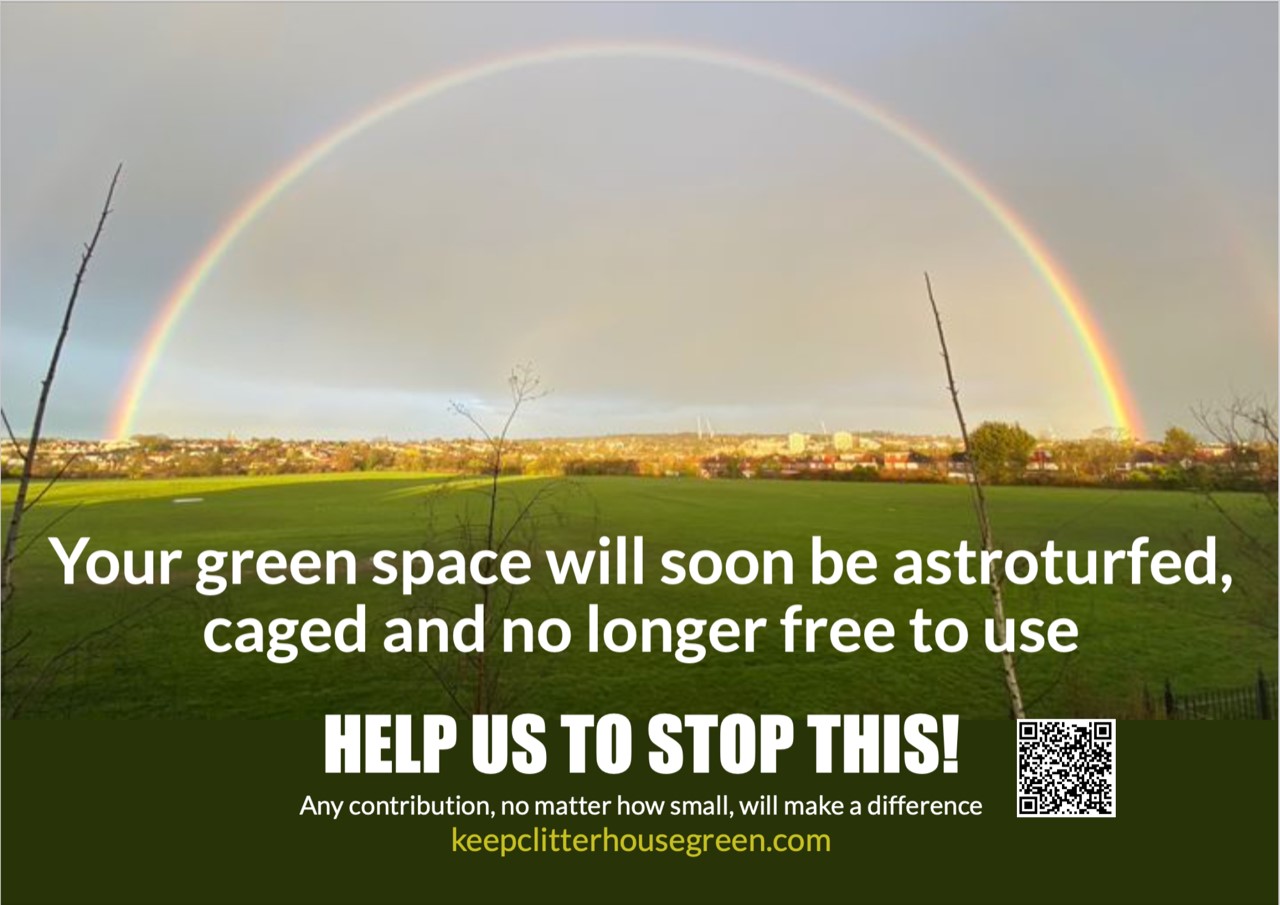
As you may know, the proposed plans for Clitterhouse Playing Fields were unanimously approved by Barnet Council, despite 82% objections.
The application was then referred to the Secretary of State (SoS) because Sport England had objected. However, our MP did not want to get involved and the SoS did not call it in. An opportunity for some levelling-up in Cricklewood was lost.
Our Keep Clitterhouse Green campaign to protect the playing fields continues.
We are now crowdfunding to determine whether the application can be taken to judicial review. We think there are strong grounds but it is not for us to say. Money raised will pay for solicitors and a barrister to prepare a legal opinion so we can assess best way forward.
It would be great to have your support. You can donate via GoFundMe.
As you may know, the proposed plans for Clitterhouse Playing Fields were unanimously approved by Barnet Council, despite 82% objections.
The application was then referred to the Secretary of State (SoS) because Sport England had objected. However, our MP did not want to get involved and the SoS did not call it in. An opportunity for some levelling-up in Cricklewood was lost.
Our Keep Clitterhouse Green campaign to protect the playing fields continues.
We are now crowdfunding to determine whether the application can be taken to judicial review. We think there are strong grounds but it is not for us to say. Money raised will pay for solicitors and a barrister to prepare a legal opinion so we can assess best way forward.
It would be great to have your support. You can donate via GoFundMe.
For those that are not yet aware, the proposed plans for Clitterhouse Playing Fields were approved with conditions at Barnet’s last Strategic Planning Committee on 4 October.
The Keep Clitterhouse Green campaign achieved:
Noise barriers.
The inclusion of the South Entrance.
More flood mitigating measures.
1,000 free hours for community use of the pay-to-play facilities.
Recognition that there are serious concerns about the use of AstroTurf instead of natural grass.
We do not think these improvements go far enough.
GGERA, Brent Terrace Residents’ Association, residents’ groups from Swannell Way and Clitterhouse Estate and other nearby residents will continue to try to influence the development for the benefit of all.
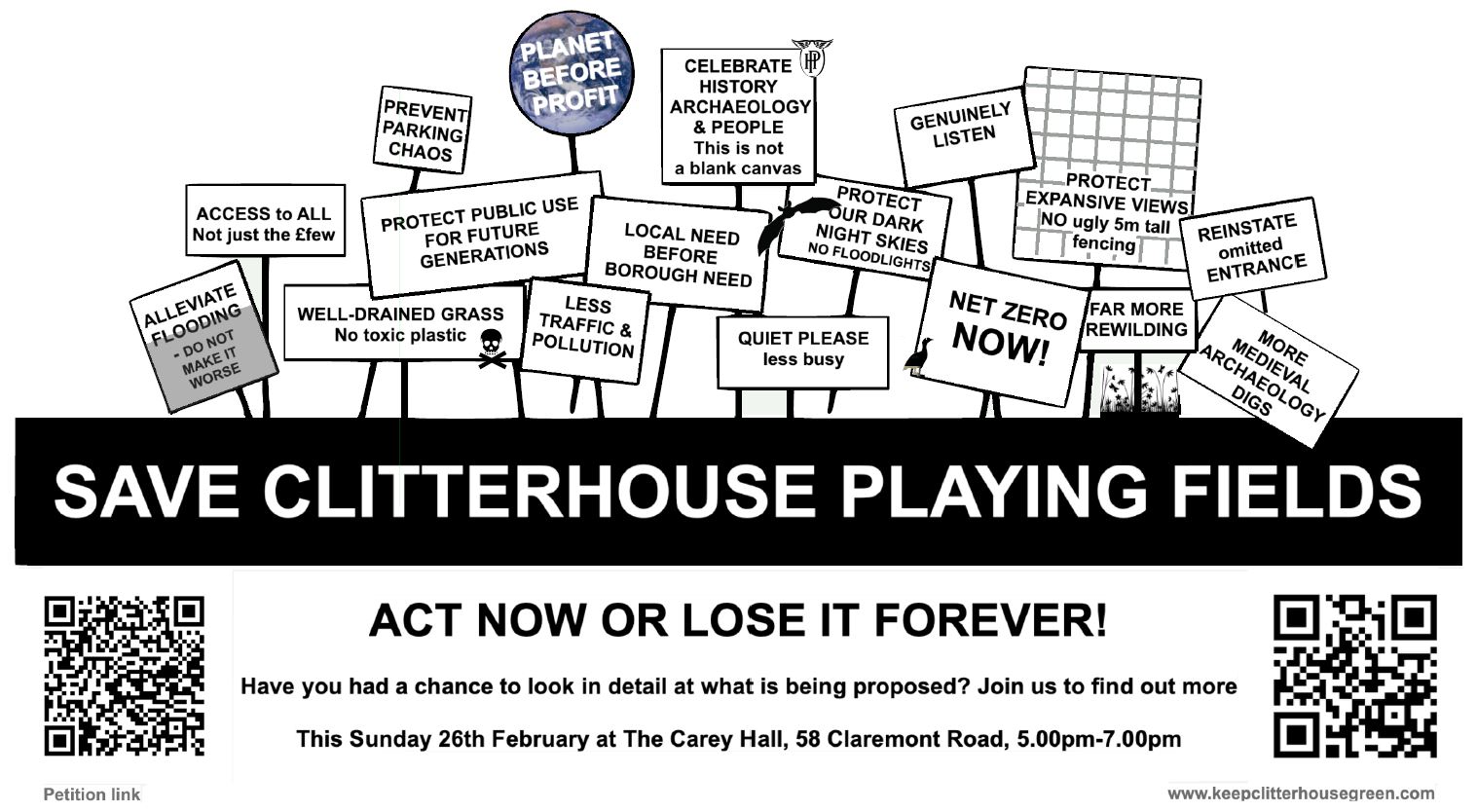
Join us, together with the Voice of Reason Choir, the Handley Page & the Victor Associations, and many others to ✨CELEBRATE✨ the playing fields’ medieval and aeronautical past, its present. and how together we can shape its future, next Saturday 13th May 2 – 4pm in front of Clitterhouse Farm Café.
Thanks to everyone who has already commented. Below is a summary of what together we have achieved so far and what still needs improving. Whether you have already commented or not, it is worth having your say here.
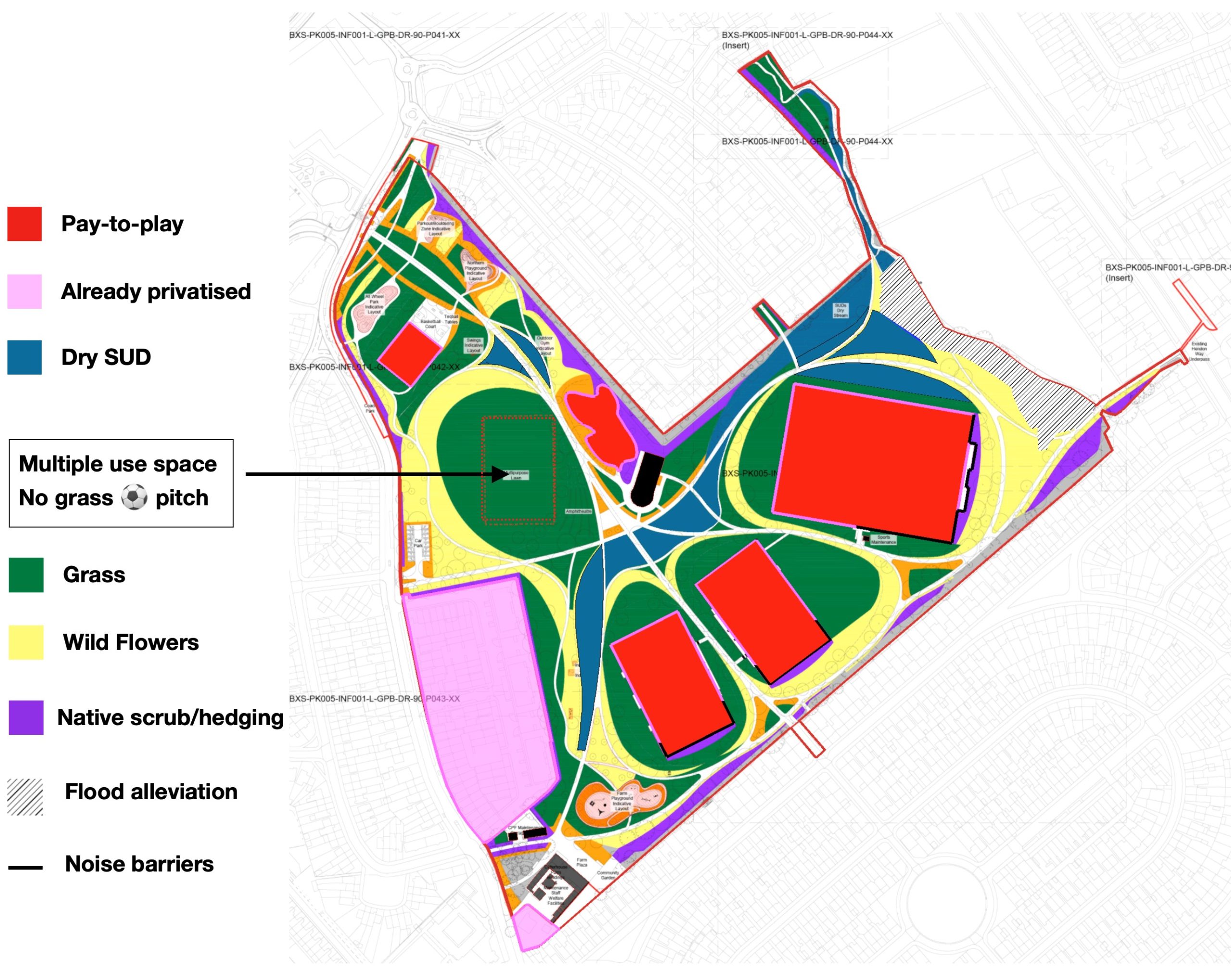
There is no change to the controversial 4 full-size, fenced-off, flood-lit, AstroTurf, pay-to-play area, 9 am – 9 pm every day of the year.
Partial 3 m high noise barriers are proposed to the south of the all-weather pitches. (See picture below.)
It is positive to see some proper noise mitigation measures in place. However, these might not be enough against the cumulative noise levels for everyone in the park and for Prayle Grove residents, who live at a similar distance from the football pitches. Although the barriers would be covered with plants, they will reinforce enclosure and further obstruct the long views to and from Clitterhouse Farm buildings, locally listed for their historical value.
The phasing has changed
The proposed CPF Part 1 area will be delivered in a single phase. Although the improvements to Purbeck Drive (in the immediate vicinity of the southern gateway to CPF) are outside the site, it is proposed that these works are completed at the same time as the CPF Part 1 area.
CPF Part 1 area: This area includes the northern area facilities, the blue badge car park, the multi purpose lawn, amphitheatre and central plaza, the pedestrian/cycle path through to Purbeck Drive as well as new planting and the pathway along the southern boundary of CPF. This first phase will deliver the two MUGAs, the basketball court and teqball tables, new challenger sports including the all-wheel park, parkour and bouldering zone, a swings area, children’s playground, four new and improved entrances, seating, cycle stands, wayfinding signage, lighting and paths, as well as trees, ornamental and hedge planting, wildflowers and grass to create an attractive green space, all of which will activate the playing fields. The existing site levels in this northern part of the Site will be gently reshaped to provide the new, more accessible, northern entrance to CPF.
CPF Part 2 area: The remaining areas within CPF will be delivered in two phases, with the first phase including the CPF Pavilion, mini golf, boules court, part of the dry SUDS stream, two 3G all-weather pitches and the Sports Storage Building. CPF Part 2 Phase 2 will then be the final delivery phase for CPF. This will include the two sand-dressed all-weather pitches, the Clitterhouse Stream improvements and nature park, the remaining section of the SUDS dry stream, areas of incidental play, the CPF Maintenance Storage Facility (and delivery of the associated maintenance staff welfare facilities), farm playground, learner’s bike track, community orchard, wayfinding signage, seating, cycle stands all interspersed with trees, ornamental and hedge planting, wildflower meadows and grassed areas to create places for all to enjoy.
Our local Councillors, GGERA and its residents strongly objected to the omission of the South Entrance to the site on Purbeck Drive in the original application. This was a major strategic oversight. We welcome the Purbeck Drive improvements, as well as its proposed CCTV and the South Entrance being included in the overall governance and management of the park.
We have campaigned actively against the pay-to-play excluding local residents. Amended proposal includes 1,000 free hours per year for 5 years. This is good news for locals who would like to use the sporting facilities. It is not clear how this would operate.
We strongly objected to the lack of proper space for community use space, as the only multiple use space had a pay-to-play grass pitch. It is great news that the grass pitch is no longer needed and multiple use space will be available to the public throughout the year. However, this is temporary.
We have been actively asking for sporting activities to finish at 7 pm or at sunset, whichever is earlier. However, no concessions have been made to the negative impact that 9 am to 9 pm perpetual noise and light nuisance will have on the mental health and well-being of immediate neighbours, young children and those working from home. We would welcome peace and quiet to have allocated times each day, and in the yearly calendar.
A growing group of very concerned residents has been proactively researching AstroTurf’s risks to human health, environmental pollution, climate change and increased flooding. At a time of climate emergency, there is no justifiable argument to replace many hectares of natural grass with plastic grass laid on tons of toxic, polluting rubber crumb, leaking into Clitterhouse Stream, the allotments and, further down, into the Welsh Harp reservoir. We welcome the rephasing of the football pitches to Part 2 Phase 1, with the hope that in the meantime legislation will change and truly environmental materials become available.
Thanks to all for your continued support. If you’d like to know more about the above, have any questions or would like to share your views, please do join us on May 13th. Alternatively, you can email us at contact@ggera.org.uk. In any case, please keep in touch and have your say.
Judy Lester kindly passed on the following about the MOLA dig in Clitterhouse Playing Fields in 2021/2022.
Our archaeologists unearthed centuries of history, resting just a few feet beneath the ground.
Roman Farmers
Our dig has revealed that during the Roman period (AD 43-410), the area was already being used for farming. We found several ditches, which separated different fields. Surviving fragments of Roman pots, bricks and tiles have helped us date these ancient boundaries. One of these ditches was part of a curved or circular enclosure and here we recovered a cow’s tooth, evidence for the presence of domesticated animals.
We also retrieved some plant and insect remains from the fill of the ditches, and they helped us reconstruct what the landscape looked like in Roman times. We identified buttercups and water fleas, usually found by ditches and ponds that would seasonally dry out.
Archaeology and Old Maps
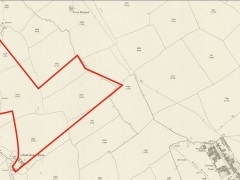
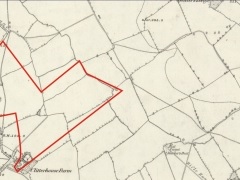
People continued to grow crops and raise livestock for centuries at Brent Cross. Although now a part of London, historic maps have shown this area remained rural until quite recently. The current shape of Clitterhouse Playing Fields can be traced on maps of over 160 years ago, split over several fields which were later combined to form the park.
Before we started digging, the field was investigated by a geophysical survey. Geophysical surveys use a variety of tools to sense for walls, ponds or ditches that might be beneath the ground. These instruments register changes in magnetic strength and electrical conductivity or may use a radar to produce an image of what’s under our feet. They can help archaeologists understand where they should excavate.
One of the things registered by the geophysical survey carried out at Clitterhouse Playing Fields was a large magnetic anomaly. By checking the 1754 plan of the ancient manor of Hendon we found out this corresponded with the location of an old pond, later backfilled and now disappeared. The pond was investigated as part of the MOLA dig and it produced some of the best-preserved finds from the site.
Whilst railways have served the area since 1870 (when Cricklewood Station opened), this part of London maintained its rural character well into the 1920s. During World War II part of the park was turned into allotments and we found the remains of some of the concrete air raid shelters built at the time.
Snapshots from the Past
We unearthed many different objects at Clitterhouse Playing Fields, some very old, others revealing peculiar stories from the near past.
One of the most interesting finds is dated to the Roman period. In one of our trenches we found a small fragment of a beaker produced in Cologne. Almost all Roman materials found on site were made fairly locally, however this pot shows how goods travelled all around the Roman empire, even reaching rural areas of Britain.
Our archaeologists also recovered many glass bottles dating to the Victorian period (1837-1901), most of them from the old pond. The majority were used for soft drinks, but among them was a far more sinister container – a poison bottle. Poison bottles had distinct shapes that changed based on what was inside them. This was so they could be recognised by touch even in the middle of the night, when candles were often the only source of light. It was important for people to correctly identify what they were looking for, to avoid ingesting the wrong liquid! Our blue-glass poison bottle was filled with ‘granular citrate of magnesia’, the name clearly stamped on its side. However, despite the deadly name given to its container, this substance was used to cure constipation. It can still be found on the shelves of health food shops!
Lastly, our archaeologists identified a rather ‘recent’ find – a German bayonet. This specific model was in use before and during WWI. How did this weapon end up in a park? Was it brought to London as a souvenir – or maybe a trophy – by a former English soldier? Or did it belong to a collector who discarded it after the war?
Not every archaeological dig uncovers beautiful mosaics, precious objects, or large buildings, but this doesn’t mean our discoveries are any less relevant in the story that they tell. Our dig at Clitterhouse Playing Field has unearthed the story of a community changing through times, as Roman fields slowly became part of a bustling city. This story now continues with the new regeneration plans. Who knows what future archaeologists will excavate here?
Clitterhouse Playing Fields are being regenerated as part of Brent Cross Town, a partnership between Argent Related and Barnet Council, managed by Galldris. If you are interested in the current plans for the Brent Cross Town development, find out more at https://www.brentcrosstown.co.uk/vision.
The Clitterhouse Playing Fields area in 1864, 1912 and now, with the current extent of the park outlined in red.